
I'm Reading Comeeks
I dedicate this blog to comics in all forms, manga, autobio, superhero, art books, etc. And of course, since I need a challenge, I've decided that I'll read and write (short) reviews for 365 comics during 2015.


Unpopular Opinion
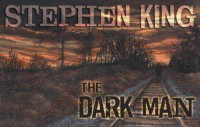
I don't like Stephen King's writing. It turns out I like his poetry even less.
His poem goes at length to describe the doings and ramblings of The Dark Man, who wanders through desolate scenery, stuff common to King writings. Abandoned circuses, crawling spiders, misshapen scare-crows, etc.
Finally he reaches his destination, abandoned carnival equipment litter a field, a young woman scantily clad touches herself when she sees the Dark Man coming. He kills her. The end.
I just don't understand what people see in Stephen King.
The art here is also not my favorite. It's goopy in a Gammellian way, but not nearly as well done as Stephen Gammell.
 1
1
Kids Non-Fiction



This Summer I am leading a book club for kids in grades 1-3. I'm excited, in part, because we've decided to combine our former girls and boys clubs into a mixed 'kids' book club, I feel like we're finally stepping out of a box and into bigger and better possibilities for discussions and books. The other part, is of course, just me liking to share books with people.
Still, there is pressure to find books specifically that the boys will like. I was reminded to make sure my book choices would not be 'too girly' and to make sure the books I chose would also appeal to the boys in the club. As if all books, unless otherwise noted, are written for girls.
I'm annoyed two-fold by the remarks. One, why do we need to cater to the boys? Why aren't we concerned about finding books that are not 'too boyish' to appeal to the girls of the club? Two, why are the boys being treated as if they are all the same and all have the same tastes?
If we, as librarians/parents/teachers/friends/caregivers, continue to keep one set of ideas from boys whilst pushing another upon them, of course they will never (admit to) like a variety of books, including those that have themes that are wrongly seen as of interest specifically (or only) to girls. I think that the program of promoting specific books and clubs to boys had it's time, but now it's time to move on. We need to instill the idea that books are not gendered things, that it's good to pick up and try out any book, regardless of what it's cover looks like, regardless of whether it's an action book or a poetry book. Read two pages, then if you don't like it, pick out something else. Simple as that.
I am excited to host the club, especially now that we've combined the two groups. In truth I was always frustrated as a facilitator when my choices of books were limited, sometimes wishing that I could have hosted the boys reading club as the choices for their books generally aligned much closer to my own reading tastes than those often chosen for the girls club. Give me zombies! Forget Green Gables! (I'm kidding, I liked Anne of Green Gables as a kid...though I still preferred Goosebumps.)
I had a young boy come up and ask me where the 'boys books' were in the library. I told him all the books were boys books and girls books too and that library books belonged to everyone. I realized how corny and fake-y that sounded even as I said it and didn't blame the kid when he didn't believe me. I always hated when adults talked down to me, as if I didn't know that the world wasn't a fair utopia where I could do anything I wanted and be whatever I dreamed. I probably gave my teachers the same disdainful look I received from this kid.
So, I asked him what kind of stories he liked and he said, "ghosts." I showed him where the Goosebumps were and he said, "So there you are!" As if greeting old friends. I wish I could say that I bonded with that child over our shared love of Goosebump books and he came to realize that he could share an interest even with weird old library ladies, but yeah that's not how life works. It was pretty obvious that I had been dismissed by the kid, so I just shrugged and went back to the desk. Yeah, a little bit of Fail, but that's how I roll.
Maybe I should talk about some books now. I was reading these non-fiction easy(ish) books, all of them beautifully illustrated, in hopes of finding a good, not too challenging, non-fiction book for my 1-3 grade club. I wanted a nice non-fiction account of something, but as for what, I'm pretty open, so I ended up with a rather odd selection, which could almost all be used in a club, really. Choices, choices.
 How to swallow a pig by Steve Jenkins and illustrated by Robin Page is a book of strange and awesome animal facts. From the nesting rituals of the bower bird to the disguises of an octopus and of course the eating habits of boa constrictors the book presents very interesting facts contained in brief and fun step-by-step instructions. One fun fact I learned was that as an Orb Weaver such as a barn spider weaves a web, first it lays out the pattern, then it lays out the sticky webbing, whilst eating the original webbing. I always thought a spider weaves a web and that's that, I had no idea that it was as precise and that spiders to produce both sticky and not sticky silk. Neat! Could turn into a fun game for acting out some of these directions (some would work better than others!). I also thought that the how to catch dinner instructions for a crocodile were quite amusing (despite being totally factual and deadly).
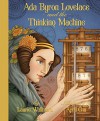
 Ada Byron Lovelace is the first computer programmer and a very interesting person besides. This book presents her life simply, but well. This is also the first time I've read about Lovelace where the quote, "Mad, bad and dangerous to know" wasn't used, which is a real plus (nothing against Lord Byron, but it's nice that for once the man falls to the background). The book focused squarely on Lovelace, her perseverance when illness took away her sight and mobility, her amazing skill with mathematics and innovation in creating a complex program for Babbage's' thinking machine. It was fun to note that even though she was never able to try the program out, it was discovered that with one minor error her program worked! The illustrations here are somewhat sweet, often featuring a kitten somewhere, but as on the cover, Ada's determined expressions feature on every page as well.
 E.E. Cummings has a fascinating life story and an inspiring one. I could definitely see reading this book and asking kids what they thought of his poems, if it was silly of him to write sentences that dotted the page instead of running from one side to the other, or if they think it's okay to write with a lower case I.
I loved the subdued illustrations with little typewriter type dotted the pages, the way words were emphasized and the poems flowed with the images across the pages made everything much more accessible and attractive. Showing e.e. cummings as a young child, his mother writing down poems for him, was sweet and inspiring, along with the look at his rejections that lead ultimately to his being a famous poet! See, even famous poets have to deal with people telling them they're no good!
 A cautionary tale with a ton of fun flip ups. Even though I don't think I'd use this one in a book club, it was still really fun to read. Though not for the faint of heart or those who don't like books that show children being eaten. That wasn't a spoiler because the title tells it all, Jim, Who Ran Away From His Nurse And Was Eaten by a Lion. There. Now we know what happens, but along the way we learn all about Jim and the fact that he doesn't appreciate cake or tea. So, really, we can't feel too bad for him when he ends up as a lions dessert. The rhyming couplets describing Jim's fate are especially funny.
 I have never been a fan of Walt Whitman. I hated reading his poetry. Song of Myself nearly killed me. Reading it reminded me of a guy I knew in one of my early college lit classes, who rebutted my point about a T.S. Eliot poem by saying that the only reason I thought about the poem in that particular way was because I was a woman. The class and I were all speechless. So, yeah, to say that approaching this single, short, poem by Whitman wasn't really my idea of a good time, is to say very little on the matter.
I didn't like it. I was bored. The illustrations while telling a more interesting story, led me to believe that even the child of the book was bored. The language was not something a child would show much interest in, and truthfully, I wasn't much interested in it either. The best part of the book was the quote from Einstein at the very back, which summed up what Whitman was trying to say in the poem in one succinct, clear and awesome line.
The illustrations depict a child who is bored to death by the lecture his well meaning parents bring him to, so instead of falling asleep in the lecture hall, he wanders outside and makes discoveries on his own in the natural world and in his imagination.
"Imagination is more important than knowledge. Knowledge is limited. Imagination encircles the world." -Einstein
1
Macabre Tales

A nice adaptation of some of Lafcadio Hearn's most famously translated creepy Japanese folk tales. Of course the beloved Faceless Ghost would be front and center! At least there are no Windego. Though the Yuki-Onna comes pretty close.
Each story, from Hoichi the Earless to the story of a woman who really regretted giving away her mirror, was very well paced and laid out, creating a similar tension and spookiness that comes from reading the stories.
Overall a very successful adaptation, which would be suitable for adults and teens.
3
New Beginnings and an Unexpected Continuation


Remember that time I went to Japan and stopped updating this blog (and never again kept a very good update schedule)?
School Live! was the anime of the moment in the Honey Toast cafe we visited in Akihabara. I remember looking at it and wondering what the heck it was about, it looked like a happy-go-lucky group of school girls surviving the zombie apocalypse in their school.
That's exactly what it is. Four school girls and one teacher are living in their school, hiding from members of the student body who didn't survive the initial zombie event. We don't see that, instead we're thrust right into the action from the perspective of Yuki. Everything seems normal at first, the fact that Yuki is part of the "School Living Club," a club that stays overnight at the school, seems weird, but plausible. As the story weaves on and introduces the other characters, one of whom carries a shovel everywhere, we begin to realize that Yuki's world view has strayed a bit from reality.
While Yuki still believes that all of her classmates are alive and well, the reality is that the students she sees playing baseball are actually zombies stumbling around trying to find ways to get at the girls and eat their brains.
The other members of the school living club allow Yuki to stay in her delusion, creating games while gathering supplies and pretending to go camping when the electricity goes out. It's got it's funny moments when Yuki comments on the zombies antics, but despite the comedic nature of the manga it's a little depressing too. All of these characters have lost their entire families and are living in a school surrounded by zombies. We get glimpses here and there of their desperation and the hopelessness of the situation.
I hope that those glimpses develop into more in this series. 2 1/2 stars.
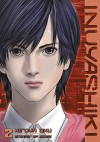
Inuyashiki 2
Although I wasn't a huge fan of Gantz, I admit I find Inuyashiki so far to be interesting and original. I really like the character of Inuyashiki as he accepts the fact that he is no longer quite human, but instead of falling into despair (especially given his horrible family situation) he steps forward to become a hero of the downtrodden. In this volume he searches for those in trouble, saving a family from a house fire and defending a salaryman who stood up to a gang of Yakuza, from being beaten to death for his impudence.
However, Inuyashiki also discovers that there is another such as him. When he hears the cries for help of a young woman and races to the scene he discovers a young man, whose back opens up to reveal a jet, launching the kid into the night. While Inuyashiki is seeking to help others with his powers, this young man is doing just the opposite.
Shishigami is a kid who has been witness to his best friend, Andou, being targeted by bullies. It's been so bad that Andou has stopped coming to school. With these incredible powers he can help Andou, defend him, get revenge. Shishigami once told Andou that the only people who matter were family and friends and that if anyone else died, it didn't bother him.
This has manifested in Shishigami choosing a house at random and then killing everyone inside. After killing three people he was able to feel alive again, indicating that becoming a robot has definitely affected him contrary to his claims that he is still the same person. He almost spared the teenage girl who came home as he was killing her family when he found out she liked One Piece, but then she kept crying so he ended up killing her in front Inuyashiki. Andou becomes increasingly afraid of Shishigami as he follows him and watches him demonstrate his monstrous powers.
I like the more detailed, less cartoony, artwork of the manga and so far the story has depth and complexity. Even without the component of becoming alien terminator things, the story about Inuyashiki's disintegrating family would be interesting, but coupled with this bizarre sci-fi element it becomes an odd and page-turning tale.
This volume focused mainly on the two characters developing their robotic powers, setting up their opposed purposes and their fateful meeting. I missed the interactions with Inuyashiki's family and pet here and I would have appreciated a little more back story on Andou and Shishigami's friendship. However, for fans of darker manga this could be a good series to start. 3 1/2 Stars.
For fans of Gantz, 20th Century Boys, or Bokurano Ours.


Ooku Volume 11
I was wrong! I thought, with the horrible death of my favorite character in the last volume, that the series was ended. Apparently, even though Gennai was most cruelly murdered and a man has reclaimed the title of Shogun, life goes on.
Actually, Ooku continues to be a source of interest and delight to me, even though I more than once felt like dashing this book to the floor as I became so disgusted with the turn of events and the complete loss of all the work some of the characters had done to change the political situation and cure the 'red face pox.' In this volume everything is reversed, with the power going to Harusada (her son has become Shogun, but he has no real power), things shift dramatically. All the men are banished from the Inner Chamber, instead to be crowded with women, who in turn flood the Inner chambers with babies.
It's a very Shakespearean plot, power hungry Harusada will do anything to remain in power. She enjoys belittling others and watching them die. She is truely a frightening character. At first I hated her for her political views, banning the study of Western medicine and raising farmer's taxes in order to pay for the many concubines in the Inner Chamber and her own luxuries. However, as I read on I became more and more frightened of her cold character, seemingly pleased when the prospect for punishment came up and she'd have a chance to kill.
It's a wonderful series and though I thought it was over at 10 volumes and it seems there will actually be a total of 12, I'm still sad that the series will end at all, I'm certain I could be reading about these fictional histories, political upheavals and thoughts on relationships and gender for ages.
More awesome manga by Fumi Yoshinaga:


Although I liked all of these, especially All My Darling Daughters, Ooku is by far my favorite series she's ever done.
2
Illustrated Classics
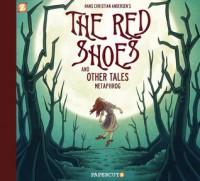
Three Hans Christian Andersen tales, the Red Shoes, the Glass Case and the Little Match Girl beautifully illustrated and presented here.
I loved the subdued tones and highlights throughout the artwork. The depictions of the feet dancing away with the red shoes and the poor girl with her stump legs were not gruesome, completely clean, no blood or bone, but somehow that just made the whole thing creepier yet.
Each of these three stories has something of the creepy to it, something other worldly, creating a nice collection to read together. The Glass Case, was to me the most bizarre and creepy and kept me thinking afterward what exactly happened.
Would be a good introduction to Hans Christian Andersen.
1
Good Neighbors

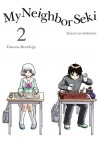
Yokoi and Seki continue their daily desk battle. Yokoi continues to lose out though, continually distracted by the bizarre games, adorable robot family and hilarious hijinks performed by her next door neighbor.
It's a pretty cute comic, bordering between slice of life and comedy manga, the volumes introduce a few other characters, but the main focus remains on Seki and Yokoi.
In the third volume a younger sister is introduced, who was pretty adorable so I hope to see more from her and more of Seki and Yokoi's home life in the future.
Funny how such a simple concept can maintain my interest over three volumes. Nothing too exciting has happened, there are no relationships and for the most part the same plot is used over and over again, Seki plays some bizarre game and Yokoi ends up getting involved in it.
The art is nice, the characters are fun and the situations are adorable and amusing.
Neh

It's like meh, only worse.
Take one arrogant medical examiner who ends up working at a funeral home. Add a criminal brother, the existence of superheroes and a race for power and money and the cure for all diseases. All we need is a little super DNA.
For all that I was bored by the plot. It was predictable. The artwork also left me yawning. I could not have cared less about the main character, even though his wife was dying of MS. The story was more about the scientist's megalomania rather than his attempt to save his wife by delving into morally gray areas. She barely figured into the comic, making the whole thing less than sympathetic.
A good concept, poorly rendered.
My Soul is a Lumpy Rock?

This series reminds me a lot of manga like Descendants of Darkness, where we are introduced to two partners, one plays the more serious, care-taker role, while the other is the weird, anti-social genius type. Like Sherlock Holmes and Watson.
So here we have these two characters whose job it is to clean up areas of psychic residue that affect those living near them. The first case involves a man living in an apartment where a young child was murdered. The malaise causes the young man to decide to commit suicide.
While our serious care-taker tries to lighten the man's heart and convince him to live, his partner cleans up the residue and waits to claim the man's soul.
They continue through the story encountering various people who through their own doings or by the influence of the remnants of tragic events are about to die before their time.
The world of the story also involves the discovery of the 'soul' which was made through the unethical experiments of an American doctor. (Any time evil is called for in manga it's an American who perpetrates it...which I suppose makes a lot of sense, but gets a bit old.)
I enjoyed the interaction between the two main characters and found the stories, especially involving such an old trope, pretty original and well done.
Pretty good, worth a library check out for those who enjoy Mushishi, Descendants of Darkness, or Library Wars.
I Think I Threw Up in My Mouth

This was almost funny in how over the top it is. Definitely not for fans of stories that make sense or have any real emotional investment in them. I will not be reading any more of this, I skimmed most of it, but don't think I can stomach another go.
The story starts out at a school that has recently changed from a girls only boarding school to a co-ed school. Only 5 boys enroll. The five boys are all total leches too. A real set of creepsters. It's obvious that the comic isn't really trying to be anything other than a goofy satiric take on graphic manga like Battle Royale where the situations go beyond ridiculous. The whole point of the book was for the five guys to peep on the girls, but they get caught and are subsequently sent to the school's prison, which is run by a gang of psychotic secret school council members who are all bishoujo of the common types.
The rest of the story follows the boys as they try to escape the confines of the prison or at least get a good view of one of the council members panties. It is so over-the-top it is almost funny, but well...I couldn't really laugh because of the stifling sexism. I know that the series is not meant in any way to be realistic, but still...I just hate the way that all the characters are complete cardboard cutouts, no originality, nothing but sex dolls. Just sad.
For example there is a scene where one of the characters, in an attempt to escape the prison is crawling through an underground tunnel and ends up directly below the sadistic prison guard girl as she does squats in her ridiculously tight school uniform with, also ridiculously tight, up the ass, panties. Then she slips and ends up ramming her stiletto heel into the kids butt, which in turn causes his fellow inmates to believe he'd been having rough sex with one of the other prisoners. Wow. I think I'm actually making this sound even worse than it is by trying to explain it...but yeah. It is what it is, which is kind of a terrible mash-up of all the worst tropes and perverted jokes.
This is not for everyone (certainly not for me) and only those who are fond of extreme sexual humor would be able to make it through this extremely long, seriously 300 page, wankfest. My poor poor brain.
 1
1
Sacred Suburbia?

Sacred Heart starts out with a typical teenage story, a girl worried about her younger sister, living the punk life... Questions of gender, sexuality, drugs and friendship are explored, but with an overhanging threat of violence, not even punk violence, but some sort of divine justice or ...vengeance?
The story starts out right away with a dead body and the reaction to that body sets the tone for the rest of the story. Almost like magic realism, only with murder.
As I read on though the questions kept adding and growing more urgent. Just where were we? Where were all the adults? What was going on here? Why were these kids so disaffected by death?
There were many somewhat funny awkward moments that are reminiscent of coming-of-age teenage stories, but the atmosphere of the entire work has a darkness to it that kept me on edge, waiting for the awful truth to be revealed.
I enjoyed the ending, but I can't help but want to see more, to understand more. This is the type of comic that will reward further exploration and reading and would be good for a discussion.
I will look forward to reading more from Suburbia in the future.
Aww! Penguins!

A penguin in a red bowler hat met a very good dancer the other day, but can't find him anywhere.
Waddle! Waddle! Belly Slide! So, the penguin waddles and belly slides around looking for his dancing friend. He meets some other penguins, but they sing and play the horn, they don't dance. Then he spots a familiar red bowler hat! It's his friend.
Or not. Instead it's a large hungry seal. "Sorry for your bad day, penguin, but I shall eat you now." Wait, the singing penguin and horn playing penguin are there to save the day and what's this, his dancing friend has been there all along...
Very goofy and funny. My favorite part is the googly eyes of the penguins, which gave them a lot of personality. A short cute book with large illustrations that would be good for storytime presentations. Repetition of "Waddle Waddle Belly Slide" could be called out by penguin loving children for a good time.
1
Probably Not

I'm not the intended audience for this I think. I hated it. I didn't understand it. I am confused by it.
A dude dressed in drag poses by cute objects spelling out "shit girls say." Like, "What are you doing this weekend." And "Do I look like a doily?" And of course, "I hate the word Moist."
I feel insulted. I also feel like asking where is the book by a girl dressed in a jean vest with aviator sunglasses and a mullet with a glued on mustache posing with camo nets and deer targets spelling out 'crap dudes mutter.' "Yeah?" "Grunt Noise." "Burp." "Ain't got no beer in there." "Sheeeeet."
Oh, sorry is that insulting? Well, don't worry, there is no such book, because for some reason it is acceptable to judge and shame women for what they say and how they say it, but somehow it's not okay to make the same judgments about men. Just like the whole "vocal fry" thing. Both woman and men can have vocal fry, yet who gets the most flack for it? Women. As if vocal fry somehow affects the value of the words being said.
We all know that people are more complex than a few stupid questions can indicate. We all know that eventually someone's gonna ask, "What are you doing this weekend." Or say something close to "Did you miss me." It's not a gender thing. Maybe I'm just judgmental and can't take a joke, but this really was not funny to me at all.
I hate that this book seems to be more than poking fun at girls, but belittling them, putting girls into a box where all that they say can be summed up in a short book and dismissed, by two men. No. Just no.
Not Easy

A great graphic non-fiction account of what happens after a woman has made the choice to have an abortion.
This topic obviously sparks debates whenever it is brought up, but this book doesn't focus on the controversial nature of the topic, but instead, and more helpfully, on the frightening, alienating process of undergoing either a surgical or medical abortion.
I like that the graphic is called, "A handbook for something hard." Hayes starts with seeking support. You are not alone, you don't have to go through this alone. That it needs to be said is a sad thing, but there it is, it's great that Hayes has created this guide that makes the process seem slightly less frightening and might help those going through an abortion feel less alone and more confident that they can get through it.
The illustrations are understated and lovely. The subtle use of color to highlight cheeks and noses lent an uncertainty to some faces and a comforting sense to others.
A very important graphic novel to have available in libraries.
Lovely

Beautiful watercolor illustrations tell the story of young Dasha's year from the point when her mother decides to leave Russia to attend an advertising school in the U.S.
Dasha stays in Russia with her grandparents and does a lot of growing up without her mom around. It's kind of sad and bittersweet to watch as Dasha becomes more independent even while missing her mom, life goes on.
After the year is over when her mother returns, the little things, like her mother bringing her presents in her former favorite color and making her a breakfast that was her favorite a year ago, are just the tip of the iceberg of what has changed in just a year without her mother there.
Really a lovely graphic novel coming of age story. This would be a great choice for a middle grade book club.
Beautiful Silence

This reminded me a lot of other wordless graphic novels/picture books I've read, especially the Arrival by Shaun Tan, which also follows a character through a bizarre city in a search for meaning.
Leaf is about a young man who discovers a mysterious blue glowing leaf and becomes determined to figure out where it came from and why there are no more in the industrialized city of black smoke where he lives.
He visits leafy libraries, follows the paths of dead leaves and eventually tracks the strange pipes back to the origin.
It's lovely artwork. I wasn't sure if it was as effective as a allegory about industrialization though, I didn't feel compelled to think too deeply about the transformation of wilderness into a concrete prison, but perhaps that is because compared to China we have pretty good air quality where I live, fewer large buildings and many less people.
Overall, though I would recommend this graphic, it's short, beautiful and it's message of returning to nature is a good one, if understated and subtle.
2
Another Graphic Memoir

Seems like there are more and more of these coming out all the time. Diary comics or comic memoirs. This one reminded me somewhat of Fun House, because of the focus on reconciling one's sexual identity and family identity, especially with a mother.
Beldan Sezen's story starts out with her long road to accepting her sexuality, going through a total of 5 fairly long term relationships with men before she was able to finally stop trying to fit herself into a gender normative role and join the LGBT community, where she became a 'baby dyke.' After joining the community she's able to strengthen her identity - or at least come to accept herself as she is more. Then after many attempts to re-connect with her mother she and her girlfriend spend a holiday at her family home and her mother offers her girlfriend a gift, showing that she accepts her into their family.
It was pretty touching end to the comic. It was also interesting to see this all from the perspective of someone living outside the U.S. Beldan's family is a traditional Turkish family living in Germany.
I also really like the variety of styles in the comic, some of it ink drawing, sometimes more cartoonish illustrations, other times highly detailed portraits. Some of the pages had a quality that reminded me, oddly enough, of the faxed letters I received at summer camp, with my brothers illustrations of Magic Cards on them. hahaha.
As a personal note, I've never understood the concept of the 'baby dyke.' I mean, I understand how it would be comforting to be taken under the wing of someone more experienced, but in a way I don't feel like it's right to label someone a novice in their own identity. Especially since it often seems like a 'baby dyke' is to unlearn one group of stereotypes (the gender normative), wholly rejecting them in favor of another set of stereotypes. Doesn't seem like a good thing to trade one set of box labels for another in my mind. Why are there 'baby dykes,' but not 'baby hets,' or I don't know...can't think of other terms. One definition of a 'baby dyke' just says it's a lesbian under the age of 25...what does age have to do with anything? So, once you turn 26...you are a 'real' lesbian?
Sorry, just my personal rant.
2